About AUTH

A century of institutional continuity.

The Aristotle University of Thessaloniki was founded in 1925 by the First Hellenic Republic — and has been continuously expanding ever since. Today, with 11 Faculties and 41 Schools, it is the largest university in Greece. The Faculties this Programme draws on opened between 1927 and 1928.

Total students
90,299
Across undergraduate, postgraduate & doctoral programmes
Teaching & research staff
1,612
Faculty members across all schools
Faculties & Schools
11·41
Faculties and Schools
Established laboratories
295
Plus 23 study rooms and 61 clinics
A founding moment

Founded in 1925. Continuously expanding for a century.

Historic university building

The University of Thessaloniki — later renamed the Aristotle University of Thessaloniki — was founded by the First Hellenic Republic on the recommendation of Prime Minister Alexander Papanastasiou. The Fourth National Assembly passed Law 3341 on 14 June 1925, establishing five original faculties: Theological, Philosophy, Law and Economics, Natural and Mathematical Sciences, and Medicine.

The Philosophy Faculty was the first to begin operations in 1926. The Natural Sciences faculty followed in the academic year 1927–28 — initially with the Faculties of Agriculture and Forestry, and from 1928–29 with new Faculties of Physics and Mathematics. The institution has been continuously expanding for a century since.

From a founding act of the Hellenic Republic to the largest research university in Greece — across one continuous arc of institutional growth. On AUTH's century

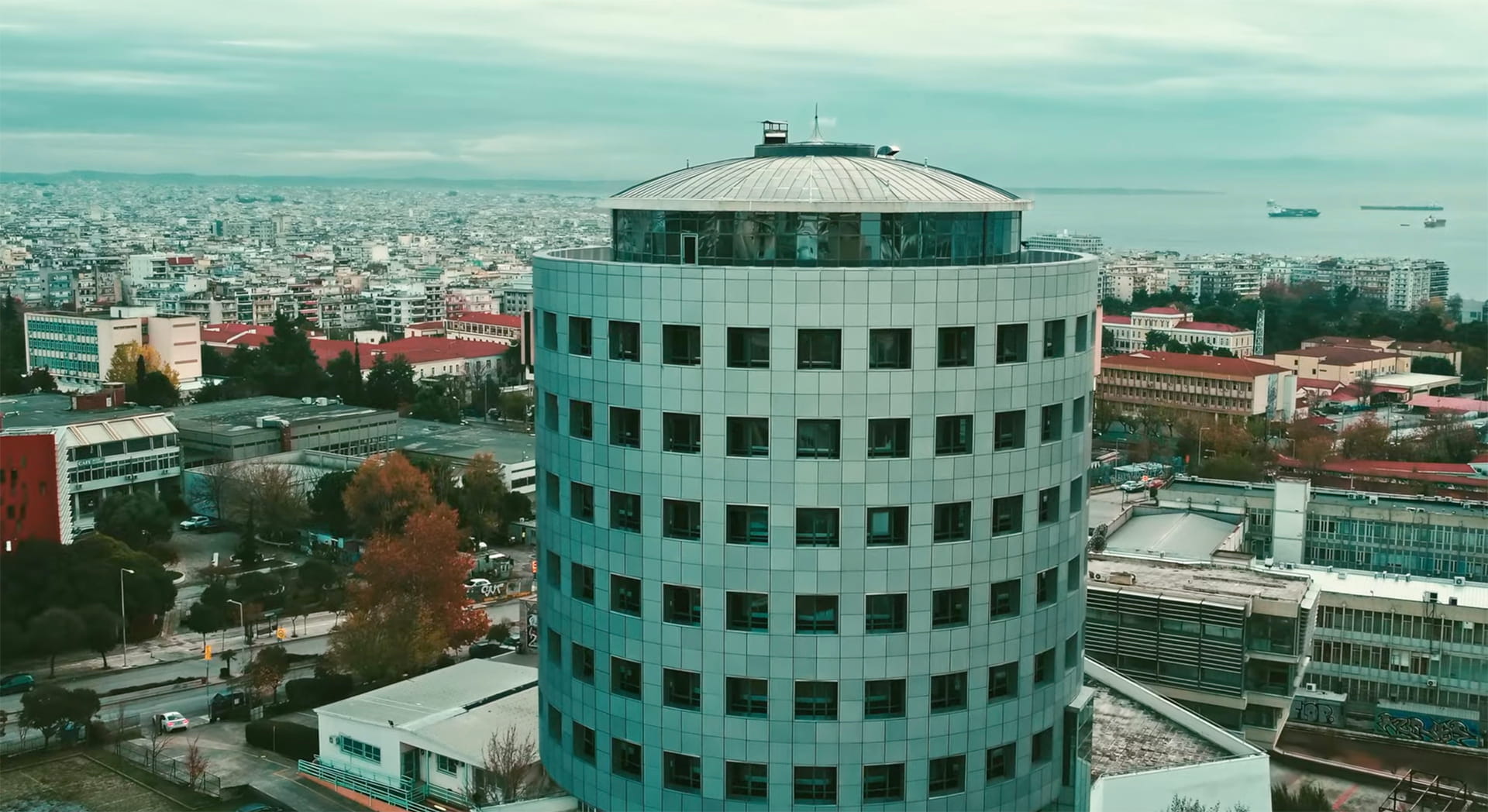
Today, AUTH hosts 11 Faculties and 41 Schools across an enormous central campus in the heart of Thessaloniki — covering 334,000 square metres of teaching, research, and administrative facilities. The central campus is supplemented by a 180-hectare research farm at the eastern exit of the city, decentralised facilities at Thermi, and a network of museums, archaeological sites, and university forests across northern Greece.

1925
Law 3341 establishes the University
Founded by the First Hellenic Republic with five original Faculties
1926
Philosophy Faculty opens
First academic year of the new university begins
1927
Faculty of Agriculture opens
One of this Programme's contributing Schools
1928
Physics established
One of Greece's largest schools of physics. AUTH hosts a strong and internationally recognised Atmospheric Physics research community, active in climate, air quality, atmospheric composition and Earth observation.
2025
A century of continuous operation
11 Faculties · 41 Schools · the largest in Greece
AUTH by the numbers

Greece's largest research university — at full institutional scale.

Undergraduate students
76,987
Across 43 undergraduate programmes
Postgraduate students
8,496
Across 185 postgraduate programmes
Doctoral candidates
4,609
Active researchers in doctoral programmes
Teaching faculty
1,612
Teaching & research staff (ΔΕΠ)
Laboratory teaching staff
371
Lab teaching staff (ΕΔΙΠ) plus 98 specialist teaching staff
Established laboratories
295
Plus 23 study rooms and 61 clinics
Library system
45+
School & faculty libraries — one of the Balkans' largest
In Thessaloniki

A 2,300-year-old intellectual centre — and AUTH's home for a century within it.

Thessaloniki cityscape with Byzantine landmarks
Founded 315 BCE · continuously inhabited

From Cassander to Cyril and Methodius — the city that has produced ideas for two and a half millennia.

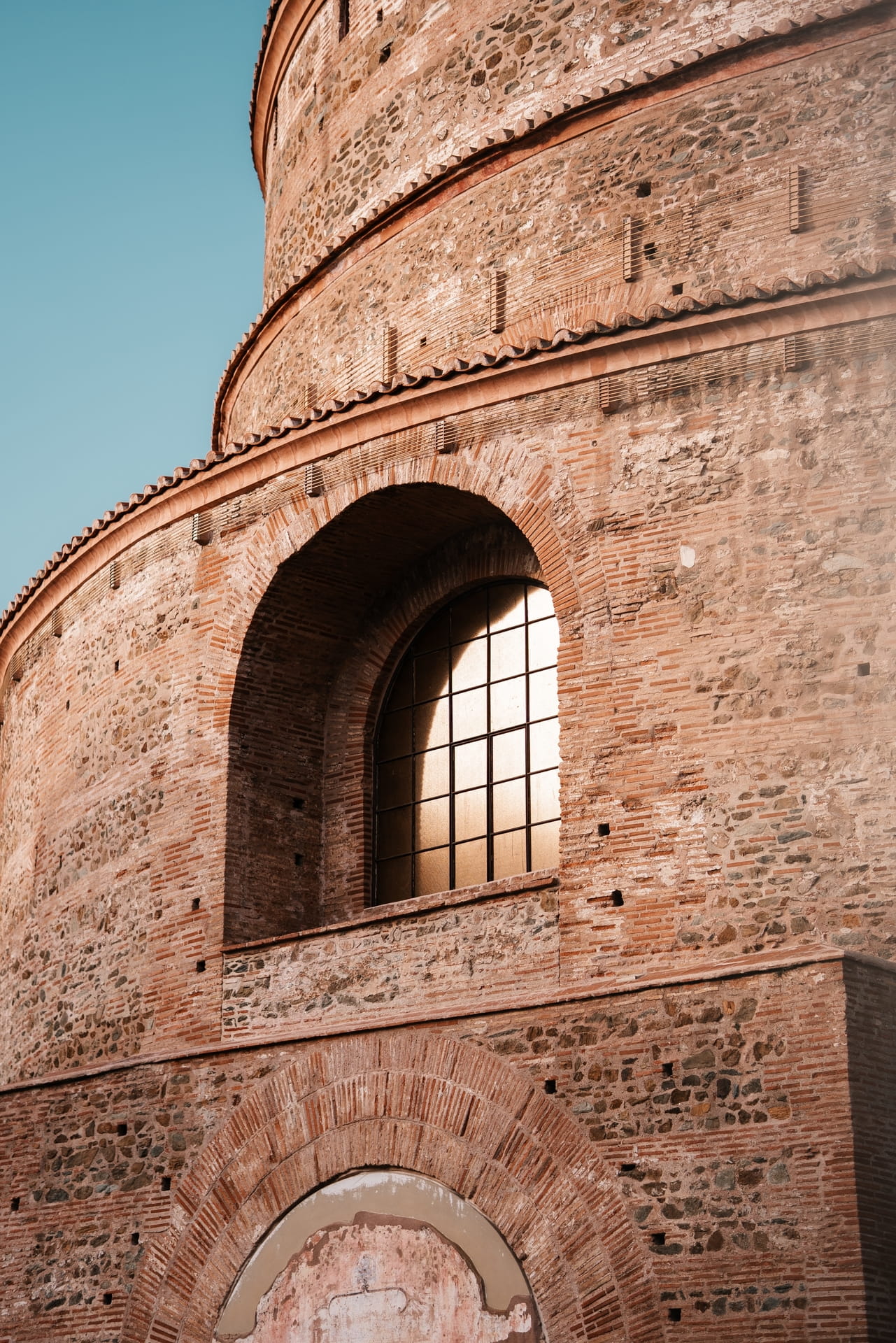
Thessaloniki was founded around 315 BC by Cassander, king of Macedonia, who named it after his wife — sister of Alexander the Great. Built amphitheatrically on the shores of the Thermaic Gulf, it became Macedonia's main commercial port and, under Roman rule, the capital of Macedonia and Epirus.

During the Byzantine period, Thessaloniki was the empire's second spiritual and artistic centre, after Constantinople. Its scholars, theologians, and jurists shaped Eastern Christian thought — among them Eustathios of Thessaloniki, the Homeric scholar; Constantine Armenopoulos, author of the legal compendium Exavivlos; and Gregory Palamas, theologian and Archbishop of the city.

Two of the most consequential figures in European linguistic history — the missionary brothers Cyril and Methodius — invented the Cyrillic alphabet here in the 9th century, an alphabet still used today across the Slavic world.

When Thessaloniki fell to the Ottoman Empire in 1430, two of its scholars — Theodoros Gazis and Andronikos Kallistos — joined the Greek humanists who carried Greek learning into the Christian West. On the city's intellectual diaspora

The city was liberated from Ottoman rule on 26 October 1912 — the feast day of its patron saint, Saint Demetrius — and within a generation became the seat of Greece's largest northern university. AUTH was founded here in 1925 as a deliberate continuation of this 2,300-year intellectual tradition: the modern academic expression of a city that has been producing scholars for longer than most European nations have existed.

Today, the city remains one of the Mediterranean's major cultural and commercial centres — host to the University of Macedonia, the International University of Greece, multiple major museums (Archaeological, Byzantine, Folklore), the State Theatre, the State Orchestra, and the Society of Macedonian Studies. Its port, free-trade zone, and international exhibition continue the commercial role that has defined the city since Cassander.

AUTH's footprint within the city & the region

A central campus in Thessaloniki — plus a network across northern Greece.

Central
Thessaloniki Central Campus 334,000 m² · in the city centre · the operational heart of AUTH
Farm
The 180-hectare AUTH farm At the eastern exit of Thessaloniki · home to working agricultural infrastructure used by this Programme
Thermi
Thermi facilities School of Visual & Applied Arts · School of Music Studies · School of Physical Education & Sports Science
Forestry
Foinikas, Thessaloniki School of Forestry & Natural Environment · Museum of Wild Fauna · Forest Botanical Garden
Forests
University Forests Pertouli (Pindos) and Taxiarchis (Chalkidiki) · used for student training and forest research
Sites
Archaeological excavations & cultural sites Vergina · Dion · Pella · Philippi · Karabournakis · Toumba · the Centre for Byzantine Research · the Teloglion Foundation of Arts
Student life & services

Six university services — supporting daily life on campus.

Service 01

Library & Information Centre

One of the largest academic libraries in the Balkans — offering printed and electronic collections, scientific journals, databases, and digital sources. Plus user training, computer access, group study areas, and special services for students with disabilities.

Emailinfo@lib.auth.gr
Phone2310 99 5300
Service 02

Catering & meals

The University Student Club operates two large dining halls (1,000 + 500 capacity), producing more than 15,000 meals per day. Free meals are provided to eligible undergraduate and postgraduate students — including international students, scholarship holders, and economically eligible families.

Capacity15,000+ meals / day
HallsLower Club & Upper Club
Service 03

Health & psychological support

Free psychological support and counselling services through the Counselling and Psychological Support Centre (KESYPSY) — including individual counselling, prevention seminars, an open helpline, and confidential support. Plus a Primary Health Care Centre for general health needs.

Emailkesypy@auth.gr
Phone2310 99 1313
Service 04

Accessibility & inclusion

The Social Policy and Health Committee removes barriers to University facilities and knowledge — through training in assistive technologies, Braille printers in libraries, audio textbooks, special bus services for people with disabilities, and the Self-Help Promotion Programme run with OKANA.

Emailselfhelp@auth.gr
PartnerOKANA · public health agency
Service 05

Sports, arts & entertainment

A modern University Gym next to the Student Club includes football pitches, basketball and volleyball courts, tennis courts, and full gym facilities. The Student Club also runs a games room, music school, reading room, low-priced canteen, and a summer campsite at Posidi, Chalkidiki.

Phone2310 99 2672
CampPosidi, Chalkidiki · summer access
IncludesMusic school · games room · reading room
Service 06

Digital governance & e-learning

The Digital Governance Unit (DGU) provides every student with an institutional email account, the eLearning platform for online courses, the Secretariat information system (SIS) for course registration and certificates, plus password recovery and technical support.

Helpdesk2310 99 9000
Applications open year-round · Cycle closes 30 September

Take the next step.

Shape sustainable systems for a changing planet — from inside one of Greece's most established research institutions.

Begin your application